
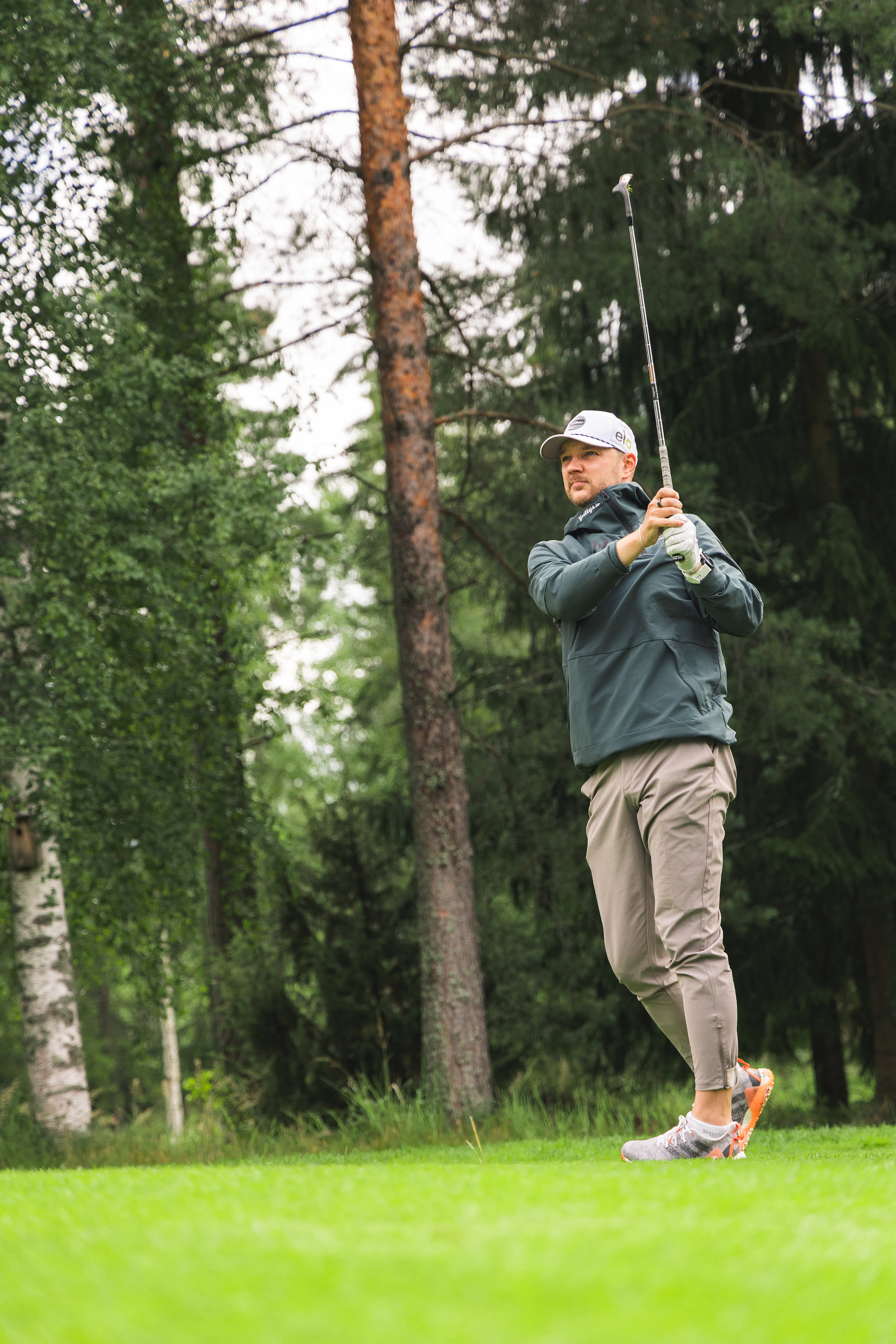
Earlier this summer I set myself a challenge that, at first glance, sounded simple. I decided to play 30 rounds of golf in 30 days. On paper it was just a numerical target. In reality it became something much more interesting. It turned into an experiment in rhythm, discipline, performance and self observation.
Most golfers measure progress in isolated rounds. You play well one day, struggle the next, and then try to figure out what changed. I wanted to remove randomness from the equation. What happens if golf is no longer occasional but constant? What happens when the course becomes part of your daily structure rather than a weekly escape?
During those 30 days I played in different weather conditions, on different courses and in different mental states. Some rounds were calm and focused. Others were rushed between responsibilities. Some were played in perfect summer light. Others in wind and rain. What remained constant was repetition. Very quickly I realised that the body adapts faster than the mind expects. Instead of fatigue taking over, a kind of clarity emerged. When you play daily, you stop dramatizing individual mistakes. A bad hole loses its emotional weight because tomorrow you will be back on the tee. The game becomes less about reacting to single moments and more about observing patterns.
Repetition creates feedback. Over time I began to see small consistencies in my game that I would never have noticed playing once or twice a week. I could sense when tempo slipped slightly. I could identify when decision making became defensive rather than strategic. Putting improved not because I suddenly found magic technique, but because I saw the same green reading situations again and again. Subtle breaks became familiar. Distance control sharpened naturally.
There is something powerful about immersion. When golf becomes part of your everyday rhythm, improvement is no longer forced. It becomes cumulative. The swing stabilises because it is constantly recalibrated. Confidence grows because uncertainty decreases. You are not chasing one perfect round. You are building a system. This challenge also revealed something about energy management. Many assume that playing daily would lead to physical burnout. What I found instead was that structured repetition is less exhausting than sporadic intensity. When golf fits into your schedule intentionally, the body and mind align more smoothly. The key was not pushing every round to its competitive limit, but allowing performance to breathe within the rhythm.
Beyond golf, the experiment reminded me of a broader principle. Sustainable performance in any field is built through consistent exposure and honest measurement. In business, you do not improve by celebrating one strong quarter. You improve by recognising the patterns that created it. In leadership, you do not grow from one inspiring meeting. You grow from repeated alignment between intention and action.
Thirty rounds in thirty days was not about endurance. It was about pattern recognition. It was about learning that performance stabilises when repetition replaces randomness. It was about understanding that discipline creates freedom. When you show up every day, the game stops being unpredictable chaos and starts becoming a system you can understand.
At the end of the challenge my handicap had not dramatically shifted overnight. What changed was something deeper. My relationship with the game evolved. I felt calmer on the course. More patient. More analytical. Less reactive. I began to trust the process rather than chase the result. Golf has a way of reflecting how we approach other areas of life. If you treat it as isolated events, improvement feels fragile. If you treat it as a continuous journey, progress becomes steady. Thirty rounds in thirty days reinforced that the real competitive advantage lies in consistency.
Performance, whether in sport or in business, is rarely about one exceptional day. It is about the discipline of showing up repeatedly and learning from what you see. That was the real lesson of the experiment.