Playing 30 Rounds in 30 Days – Is it possible?

Comment

Playing 30 Rounds in 30 Days – Is it possible?

Earlier this summer I set myself a challenge that, at first glance, sounded simple. I decided to play 30 rounds of golf in 30 days. On paper it was just a numerical target. In reality it became something much more interesting. It turned into an experiment in rhythm, discipline, performance and self observation.

Most golfers measure progress in isolated rounds. You play well one day, struggle the next, and then try to figure out what changed. I wanted to remove randomness from the equation. What happens if golf is no longer occasional but constant? What happens when the course becomes part of your daily structure rather than a weekly escape?

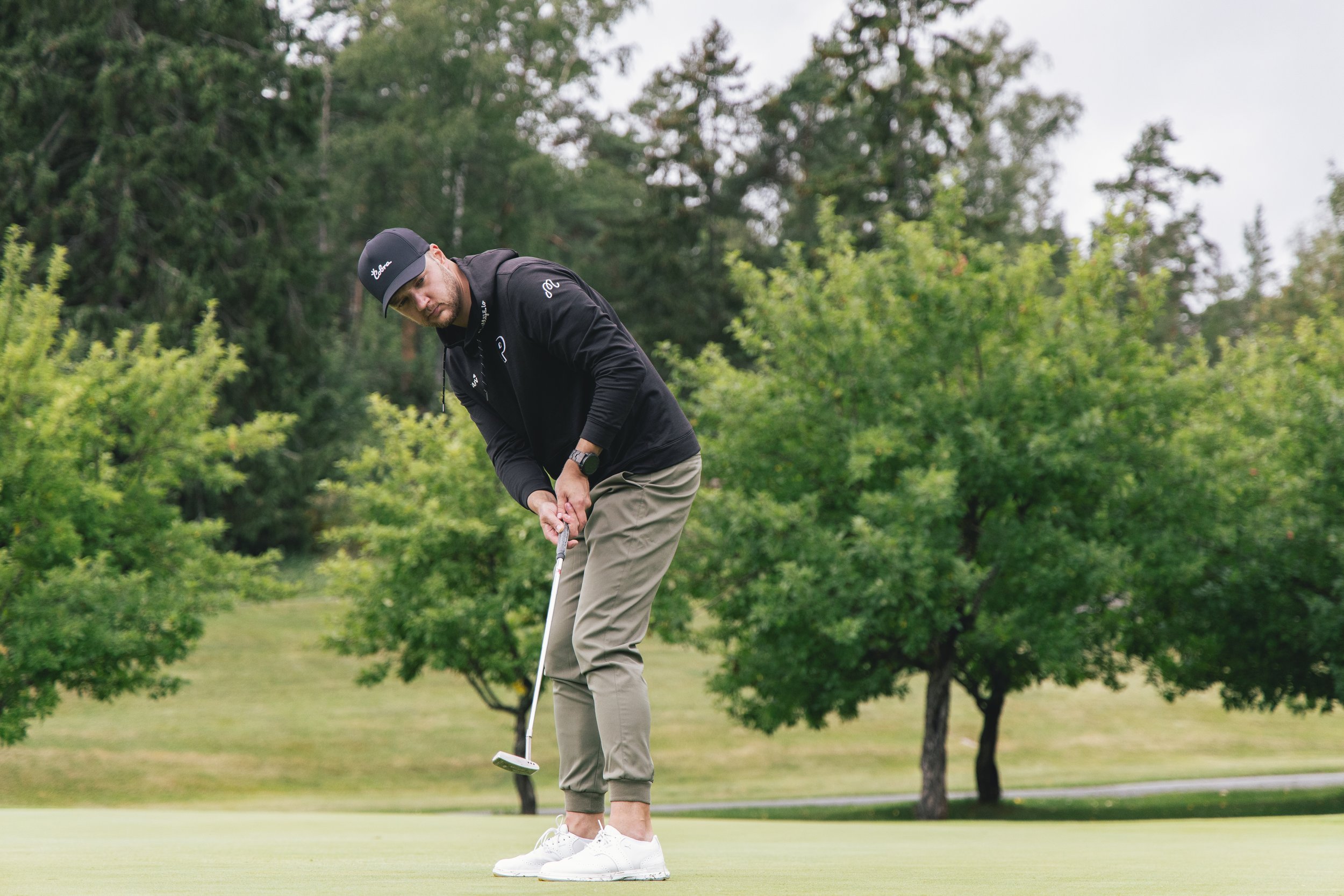
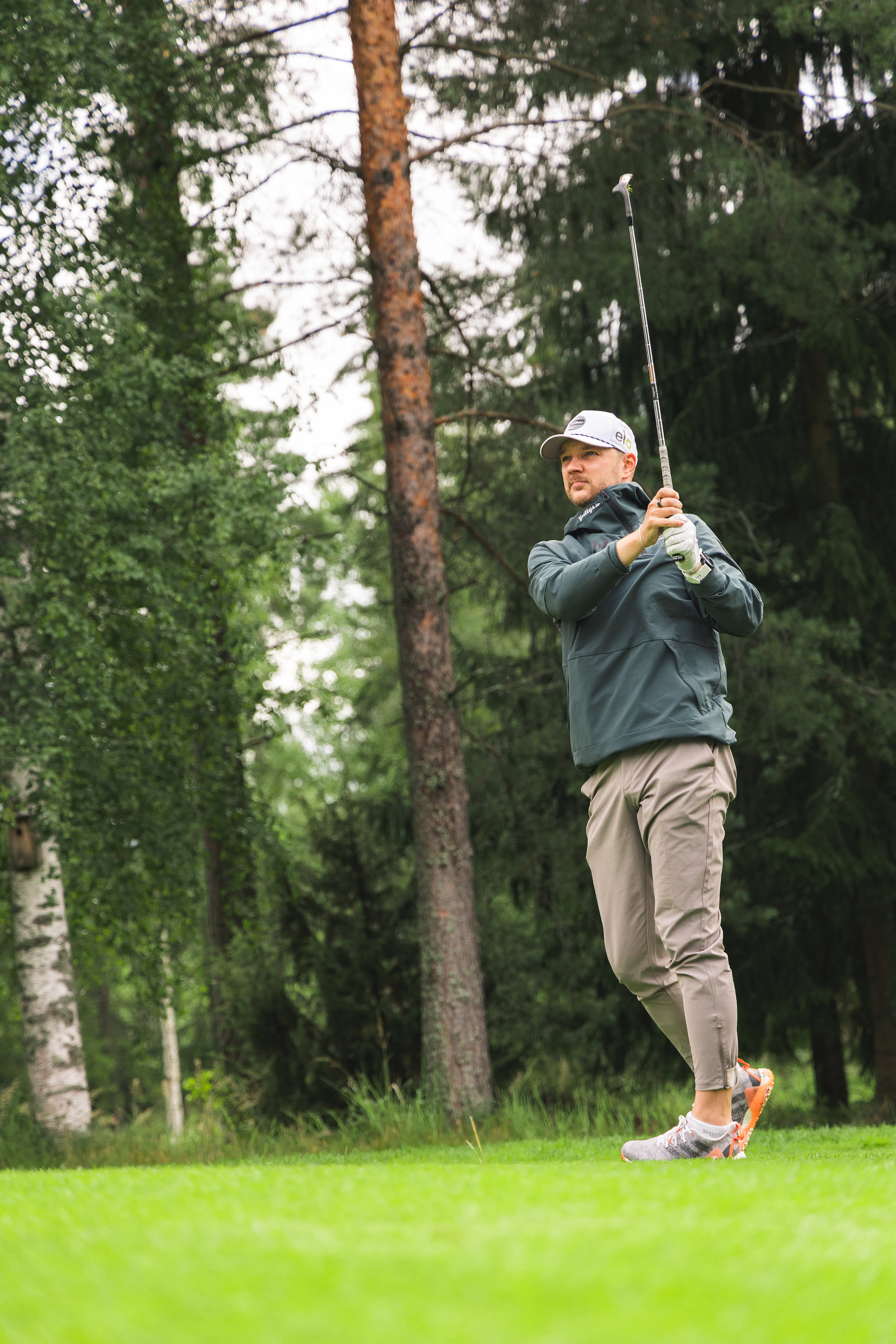
During those 30 days I played in different weather conditions, on different courses and in different mental states. Some rounds were calm and focused. Others were rushed between responsibilities. Some were played in perfect summer light. Others in wind and rain. What remained constant was repetition. Very quickly I realised that the body adapts faster than the mind expects. Instead of fatigue taking over, a kind of clarity emerged. When you play daily, you stop dramatizing individual mistakes. A bad hole loses its emotional weight because tomorrow you will be back on the tee. The game becomes less about reacting to single moments and more about observing patterns.

Repetition creates feedback. Over time I began to see small consistencies in my game that I would never have noticed playing once or twice a week. I could sense when tempo slipped slightly. I could identify when decision making became defensive rather than strategic. Putting improved not because I suddenly found magic technique, but because I saw the same green reading situations again and again. Subtle breaks became familiar. Distance control sharpened naturally.

There is something powerful about immersion. When golf becomes part of your everyday rhythm, improvement is no longer forced. It becomes cumulative. The swing stabilises because it is constantly recalibrated. Confidence grows because uncertainty decreases. You are not chasing one perfect round. You are building a system. This challenge also revealed something about energy management. Many assume that playing daily would lead to physical burnout. What I found instead was that structured repetition is less exhausting than sporadic intensity. When golf fits into your schedule intentionally, the body and mind align more smoothly. The key was not pushing every round to its competitive limit, but allowing performance to breathe within the rhythm.

Beyond golf, the experiment reminded me of a broader principle. Sustainable performance in any field is built through consistent exposure and honest measurement. In business, you do not improve by celebrating one strong quarter. You improve by recognising the patterns that created it. In leadership, you do not grow from one inspiring meeting. You grow from repeated alignment between intention and action.

Thirty rounds in thirty days was not about endurance. It was about pattern recognition. It was about learning that performance stabilises when repetition replaces randomness. It was about understanding that discipline creates freedom. When you show up every day, the game stops being unpredictable chaos and starts becoming a system you can understand.

At the end of the challenge my handicap had not dramatically shifted overnight. What changed was something deeper. My relationship with the game evolved. I felt calmer on the course. More patient. More analytical. Less reactive. I began to trust the process rather than chase the result. Golf has a way of reflecting how we approach other areas of life. If you treat it as isolated events, improvement feels fragile. If you treat it as a continuous journey, progress becomes steady. Thirty rounds in thirty days reinforced that the real competitive advantage lies in consistency.

Performance, whether in sport or in business, is rarely about one exceptional day. It is about the discipline of showing up repeatedly and learning from what you see. That was the real lesson of the experiment.
Comment

Garmin Epix 2 Pro: From the Fairway to Everyday Life

Garmin Epix 2 Pro: From the Fairway to Everyday Life

As an active golfer and technology entrepreneur, I’ve watched the crossroads between tech and golf evolve over many years. We’ve seen advancements in clubs, balls, and training tools — but today I want to talk about something different: the Garmin Epix 2 Pro. Not just any watch, but a device that shows how thoughtfully applied technology can elevate both golf and everyday life.

Versatility Built In

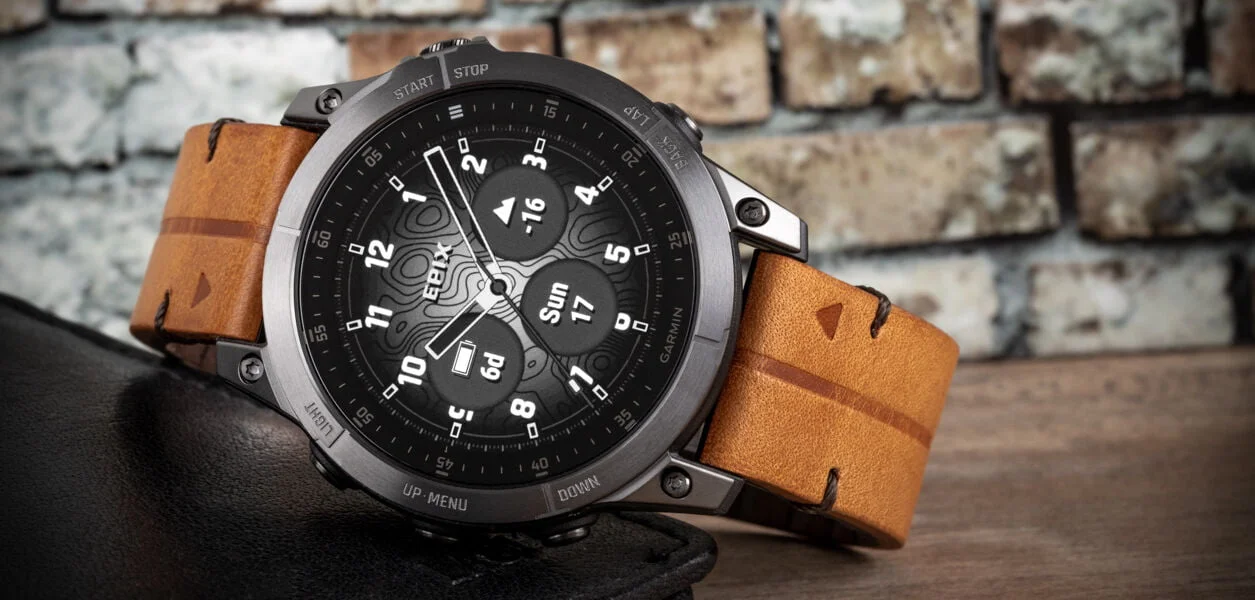
The Garmin Epix 2 Pro isn’t just a golf watch, it’s a daily companion. Many of us shift roles throughout the day: golfer in the morning, professional in the afternoon, and fitness enthusiast in the evening. The Epix 2 Pro moves seamlessly between those roles. I wear mine every day, often paired with a leather strap that gives it a refined look suitable for both casual outfits and professional settings. 

Lightweight, Yet Feature-Rich

One of the standout aspects of the Epix 2 Pro is how it balances power with comfort. Despite an extensive suite of features, it never feels heavy on the wrist a key benefit during long golf rounds or extended workout sessions. 

More Than Just Golf Distances

For those committed to an active lifestyle, this watch offers much more than golf course metrics. With advanced fitness and outdoor features, it becomes something like a personal coach for your wrist. Whether you’re tracking steps, monitoring heart rate, or exploring new hiking routes, the Epix 2 Pro keeps you informed and ready for action. 

A Display That Performs

Visibility matters, whether you’re checking distances on the course or notifications off it. The Epix 2 Pro’s display is bright, vibrant, and highly responsive, ensuring everything is crisp and easy to read. 

Global Navigation at Hand

Its comprehensive course maps mean you always have detailed guidance wherever your game, or your travels, take you. When the round is done, the watch transitions into a powerful multisport tool with features tailored to fitness and outdoor exploration. 

Balanced Elegance and Performance

Beyond the tech, the Epix 2 Pro is also a design statement. It tells a story — not just of time, but of purpose — with a sophisticated aesthetic that fits as well on the green as it does in the boardroom. 

Final Thoughts

In the world of gadgets, the Epix 2 Pro stands out as a versatile powerhouse. It’s more than a tool — it’s an extension of you, designed to support every part of life from golf to fitness and everything in between.

So here’s a thought: The best golf watch isn’t just a golf watch, it’s a fitness watch too. The Epix 2 Pro embodies that idea, reminding us that the best performance tech isn’t limited to its category and it enhances your whole day. 

Pro Golf Sunglasses vs. Contact Lenses — What’s the Golfer’s Choice?

Comment

Pro Golf Sunglasses vs. Contact Lenses — What’s the Golfer’s Choice?

I’ve worn prescription glasses since elementary school, so wearing them feels second nature — except when playing sports like golf. For a long time on the course, I defaulted to contact lenses. The idea was simple: play golf with sunglasses of a certain tint, with the option to switch or go without them if needed.

But contacts come with their own challenges. With strong prescriptions, they don’t always provide optimal visual clarity, and in spring — when pollen and dust are at their peak — they can irritate the eyes badly. Finding good prescription golf sunglasses has historically been tough in Finland because purpose-built golf eyewear wasn’t widely available. That changed when I discovered a Finnish company called Piiloset — under the OloLinssit brand — offering ProGolf® lenses specifically designed for golf!

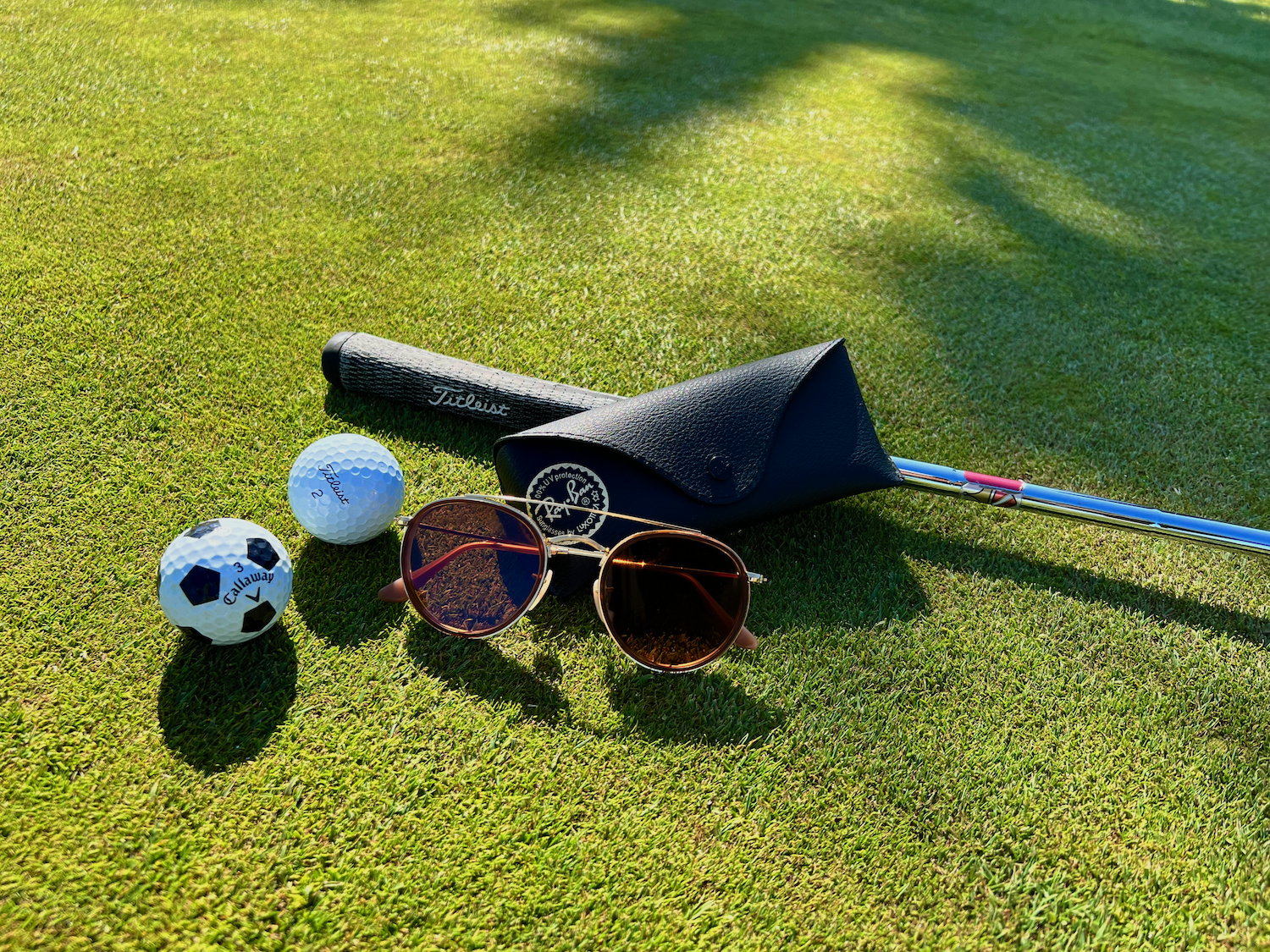
Of course, I had to put them to the test. I visited Turun Optiikka, conveniently located right downstairs in my building, and got fitted for golf sunglasses with my exact prescription. The frames I chose are Ray-Ban, equipped with OloLinssit’s ProGolf® lenses.  My test round was at Kankaisten Golf in Masku on an exceptionally bright and sunny day. Normally I play with brown lenses or Oakley Jawbreakers with violet lenses — brown for bright sun, violet for clearer contrast on partly cloudy days.

The first thing I noticed was sharpness and clarity. Prescription lenses deliver more precise vision correction than contacts, especially when astigmatism is involved. Contacts also tend to shift slightly in my eyes, which makes sharp focus inconsistent. This was a clear early win for the ProGolf® lenses. Another immediate advantage was how relaxed my eyes felt — significantly less strain compared to wearing contact lenses.

In full sun, the ProGolf® tint works extremely well. Contrast is enhanced, making it easier to read greens and track the ball after impact. The only small adjustment was when the sun slipped behind clouds — the brown tint took a moment to get used to — but even then, performance remained excellent. For me as a golfer, what really matters is putting. I’d rather have someone else watch my drives than lose strokes on the green. With contacts, the irritation and lack of tailored correction are always a factor. The strengths of properly fitted lenses come through especially on the green. I’m already at a low handicap (2.8), and fine vision while reading subtle breaks is essential.

There were no major downsides apart from that small brightness shift behind cloud cover — and that’s easily mitigated by carrying a second pair of regular glasses for dimmer conditions.

Of course, professionally made lenses offer additional advantages: 100 % UV protection, blue-light filtering, and superior MR8 optical material compared to ordinary sunglasses — and they can even be made with progressive prescriptions, which I haven’t needed yet but could in the future.

“As a golfer, putting well is crucial — even the slightest misjudgement matters. Beyond that, comfort and fit make all the difference, and those improve significantly when glasses are professionally fitted for you.”

In summary, while I’m not ready to throw away my contact lenses just yet, the ProGolf® sunglasses are now a permanent part of my golf bag — especially for bright, sunny conditions and early season rounds where contacts are least comfortable. Prescription sunglasses are also much easier to wear than constantly fiddling with contact lenses.

Comment

The Future of Customer Experience: Personalization, Omnichannel, Predictive Analytics, and Emotional Experience

Comment

The Future of Customer Experience: Personalization, Omnichannel, Predictive Analytics, and Emotional Experience

In today’s fast-paced world, customer experience has become a top priority for businesses looking to stay ahead of the competition. As we head into 2023, we can expect to see a few key customer experience trends taking over the industry.

Personalization is one of the most popular ways to create a great customer experience. In 2023, businesses will increasingly turn to technology to enable mass personalization at scale. Customers are willing to pay a premium for products that are customized or personalized, and businesses are responding by creating exclusive products and services that cater to individual tastes.

Another key trend is the shift towards an omnichannel customer experience. Customers today have multiple touchpoints to interact with a business, and they expect a seamless journey between each channel. By mapping the customer journey, outlining strategies to engage customers, identifying preferred channels, and delivering a consistent experience throughout the journey, businesses can create a cohesive customer experience. Singapore Airlines is one example of a brand that has successfully implemented an omnichannel approach to customer service.

Predictive analytics is also becoming increasingly important in the customer experience landscape. By using data to predict customer needs, generate future insights, and optimize marketing campaigns, businesses can deliver personalized service and recommendations to customers. Predictive analytics is projected to reach a global market of $10.95 billion by 2023.

Finally, emotional experience has taken center stage in the customer experience arena. Emotions play a crucial role in developing customer attachment to a brand. By measuring emotional experience through the entire customer journey using the Emotional Value Index (EVI®), businesses can identify customer pain points and root causes more effectively. By focusing on creating positive emotional experiences for customers, businesses can build a lasting client base. To learn more, read about EVI® and Emotional Experience

In conclusion, the future of customer experience is all about personalization, omnichannel, predictive analytics, and emotional experience. By focusing on these key trends, businesses can create a competitive advantage and deliver outstanding customer experiences that drive growth and loyalty.

Comment

Feel, Fluke or Specs — What Really Matters in Golf?

Comment

Feel, Fluke or Specs — What Really Matters in Golf?

In golf, there’s always debate about what matters most: the feel of the swing, the breaks of the putt, or the equipment you’re using. A good round often feels like it was built on a mix of all three — but which one really moves the needle?

In my experience, it comes down to three things working together: instinct, skill, and informed decision-making. Let’s unpack that.

Feel (“Tatsi”)

There’s no denying the role of feel in golf. That innate sense of timing, connection, and rhythm isn’t something you can quantify easily — but you know it when you feel it. A great shot doesn’t always show up on the scorecard, but you felt in control from start to finish. That’s feel.

For many players, feel is the foundation. It’s what keeps you confident in changing conditions and when your analytics say one thing but your body tells you another.

Fluke (“Flaksi”)

Then there’s fluke — that lucky bounce, the unexpected break, the shot that somehow finds the perfect line despite imperfect execution.

Fluke has its place: it makes golf entertaining and unpredictable. But relying on fluke is like hoping for lightning to strike the same place twice. Emotionally satisfying — yes. Strategically stable — no. Fluke can rescue a bad day, but it can’t build a consistent game.

Specs (“Speksi”)

Finally, specs — the equipment, the numbers, the technical side. Specs include your clubs, shafts, ball choice, and even your stance and setup fundamentals.

Specs matter because they shape what’s possible. Good equipment doesn’t guarantee good shots, but poorly chosen equipment narrows the range of good shots you can hit. Specs amplify talent and reduce unnecessary variability.

So What’s the Real Answer?

It’s not feel, and it’s not fluke — it’s specs informed by understanding.

Feel gives you confidence. Fluke adds colour to the game. But specs — when chosen with insight — give you consistency. Specs are not the enemy of feel. They support it.

If you walk onto the course with clubs that suit your swing, shafts that match your tempo, and a ball that fits your distance and spin profile, two things happen:

  1. You start making better choices because your tools are trusted.

  2. You see patterns instead of randomness.

That’s when feel stops being an internal guess and becomes an informed response.

Why This Matters to You

In golf, improvement comes not from luck but from feedback. When feedback aligns with action — when you learn why certain shots work and others don’t — improvement accelerates. That principle applies whether you’re sharpening your handicap or growing a business.

Data without context is noise. Feel without structure is inconsistent. And fluke without foundation is temporary.

Blending All Three

The best golfers don’t choose one over the other. They use:

  • Specs for consistent performance boundaries

  • Feel for execution

  • Fluke as the unexpected joy that keeps the game fun

That’s where real satisfaction lives.

Comment